

Introduction
Welding is one of the most essential processes in modern manufacturing industries. From automotive production and heavy machinery to construction equipment and metal fabrication, welding plays a critical role in assembling metal structures and components. As global manufacturing demand continues to increase, companies are under constant pressure to improve production efficiency, ensure consistent product quality, and reduce operational costs.
Traditionally, welding has relied heavily on skilled human labor. Experienced welders perform complex welding operations based on manual techniques and personal expertise. While this approach has served the industry for decades, it also introduces several challenges, including inconsistent weld quality, labor shortages, workplace safety concerns, and limited production scalability.
In response to these challenges, manufacturers around the world are increasingly adopting industrial robot welding systems. These automated solutions integrate robotic arms, advanced sensors, machine vision systems, and intelligent control software to perform welding tasks with high precision and repeatability.
Robot welding systems are a key component of modern smart factories, where production processes are automated, data-driven, and highly optimized. By combining robotics with machine vision and artificial intelligence, manufacturers can significantly improve productivity while maintaining strict quality standards.
This article explores the development of robotic welding technology, explains the components of modern welding systems, and analyzes how these systems are transforming manufacturing industries.
The Evolution of Welding Automation
Welding automation has evolved significantly over the past several decades. In early manufacturing environments, welding was almost entirely performed manually. Skilled workers operated welding torches and controlled parameters such as heat input, welding speed, and torch angle.
While manual welding offers flexibility, it also introduces variability. Human welders can experience fatigue, inconsistencies, and varying skill levels, which can lead to defects such as incomplete welds, excessive spatter, or structural weaknesses.
To improve consistency and efficiency, manufacturers began introducing mechanized welding systems in the mid-20th century. These systems used simple automation tools such as fixed welding machines and mechanical guides to assist welders.
The next major step was the introduction of industrial welding robots in the 1970s and 1980s. These early robotic systems were primarily used in automotive manufacturing, where large volumes of identical components made automation economically viable.
However, early robotic welding systems had limitations. They relied on pre-programmed paths and required extremely precise positioning of workpieces. Even small deviations could lead to welding errors.
Modern welding robots overcome these limitations through the integration of machine vision, sensors, and artificial intelligence, enabling adaptive and intelligent welding processes.
Components of a Modern Robotic Welding System
A modern robotic welding system consists of several key components working together to perform automated welding tasks.
Industrial Robot Arm
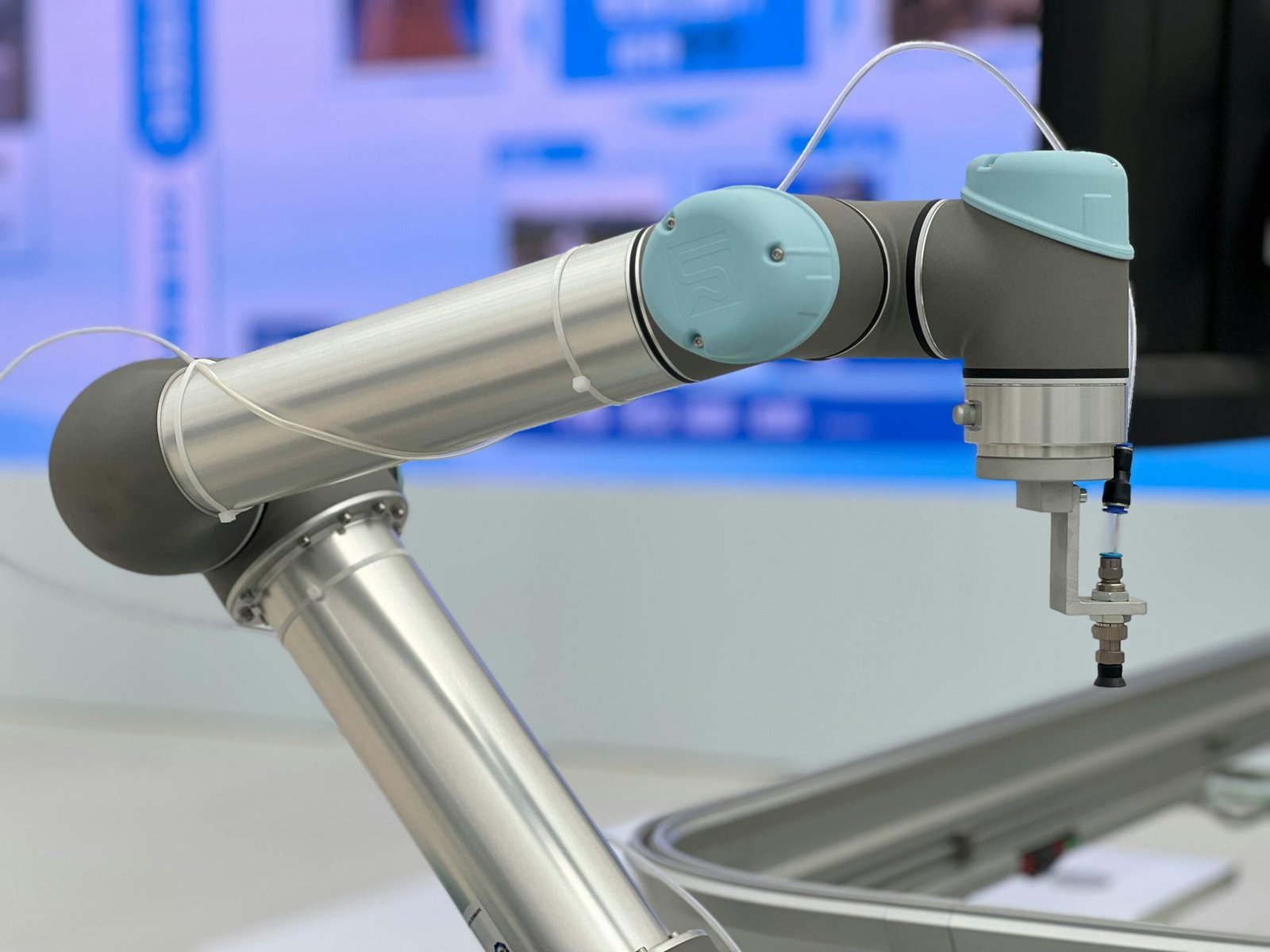
The robot arm is the central component of the system. It provides multiple degrees of freedom, allowing the welding torch to move precisely along complex welding paths. Modern industrial robots are capable of high-speed movements and extremely accurate positioning.
Welding Power Source
The welding power source controls the electrical energy required for the welding process. Different welding methods require different power characteristics. Common robotic welding processes include:
- MIG (Metal Inert Gas) welding
- TIG (Tungsten Inert Gas) welding
- Laser welding
- Spot welding
The power source must maintain stable current and voltage to ensure consistent weld quality.
Welding Torch
The welding torch delivers heat and filler material to the weld joint. In robotic systems, the torch is mounted on the robot arm and controlled automatically.
Machine Vision System
Machine vision systems play an increasingly important role in robotic welding. Cameras and 3D scanners allow the robot to detect weld seams, measure joint geometry, and adjust welding paths automatically.
Sensors and Feedback Systems
Additional sensors monitor parameters such as temperature, arc stability, and welding penetration. These sensors provide real-time feedback to ensure optimal welding performance.
Control Software
Advanced control software coordinates all system components. The software plans welding paths, controls robot movements, and adjusts parameters based on sensor data.
Advantages of Robotic Welding Systems
The adoption of robotic welding technology offers numerous advantages for manufacturers.
Improved Weld Quality
Robotic systems provide extremely precise and repeatable movements. This ensures consistent welding parameters and significantly reduces defects.
Higher Productivity
Industrial robots can operate continuously without fatigue. This enables manufacturers to maintain high production output, even in demanding environments.
Reduced Labor Costs
By automating repetitive welding tasks, companies can reduce reliance on manual labor and allocate skilled workers to higher-value tasks.
Enhanced Workplace Safety
Welding environments often involve high temperatures, bright arcs, and harmful fumes. Robotic systems allow operators to supervise welding processes from safe locations.
Scalability
Robotic welding systems can easily be integrated into automated production lines, allowing manufacturers to scale production as demand increases.
The Role of 3D Vision in Robotic Welding
One of the most significant advancements in robotic welding technology is the integration of 3D machine vision systems.
Traditional robotic welding systems required extremely precise positioning of workpieces. If components were even slightly misaligned, the welding process could fail.
3D vision systems solve this problem by allowing robots to detect the exact position and orientation of weld joints.
Weld Seam Detection
3D scanners can analyze the geometry of a weld joint and identify the exact location of the seam.
Automatic Path Planning
Once the seam is detected, the robot can automatically generate an optimized welding path.
Real-Time Adjustment
Advanced vision systems allow robots to adjust welding parameters in real time based on variations in joint geometry.
This capability greatly increases the flexibility of robotic welding systems and enables automation in applications that were previously difficult to automate.
Industrial Applications of Robotic Welding
Robotic welding systems are widely used across multiple industries.
Automotive Manufacturing
The automotive industry is the largest user of robotic welding technology. Robots perform thousands of welds on vehicle bodies and chassis components.
Heavy Machinery Production
Construction equipment and agricultural machinery require strong welded structures. Robotic welding ensures structural integrity and production efficiency.
Shipbuilding
Large-scale welding operations in shipbuilding benefit from automated welding systems that can handle long seams and complex geometries.
Metal Fabrication
Metal fabrication companies use robotic welding to improve productivity and ensure consistent product quality.
Challenges in Robotic Welding Implementation
Despite its advantages, implementing robotic welding systems also presents several challenges.
High Initial Investment
Industrial robots and welding equipment require significant upfront investment. However, these costs are often offset by long-term productivity gains.
System Integration Complexity
Robotic welding systems must be carefully integrated into existing production lines.
Programming and Setup
Traditional robotic welding required extensive programming. However, modern vision systems and AI technologies are reducing these complexities.
Future Trends in Robotic Welding Technology
The future of robotic welding will be shaped by several technological trends.
Artificial Intelligence
AI algorithms will enable welding robots to automatically optimize welding parameters and adapt to different materials.
Collaborative Robots
Collaborative robots, or cobots, will allow humans and robots to work together safely in shared environments.
Digital Manufacturing
Integration with digital manufacturing platforms will allow real-time monitoring and optimization of welding processes.
Smart Sensors
Advanced sensors will provide more accurate feedback for adaptive welding control.
Conclusion
Industrial robotic welding systems have become a cornerstone of modern manufacturing automation. By combining robotics, machine vision, and intelligent control systems, manufacturers can achieve unprecedented levels of productivity, precision, and operational efficiency.
As manufacturing continues to evolve toward smart factory environments, robotic welding technology will play an increasingly important role in enabling flexible, high-quality, and cost-effective production.
Companies that adopt advanced welding automation solutions will gain a significant competitive advantage in the global manufacturing landscape.